Why old cast iron is smooth and new cast iron isn't
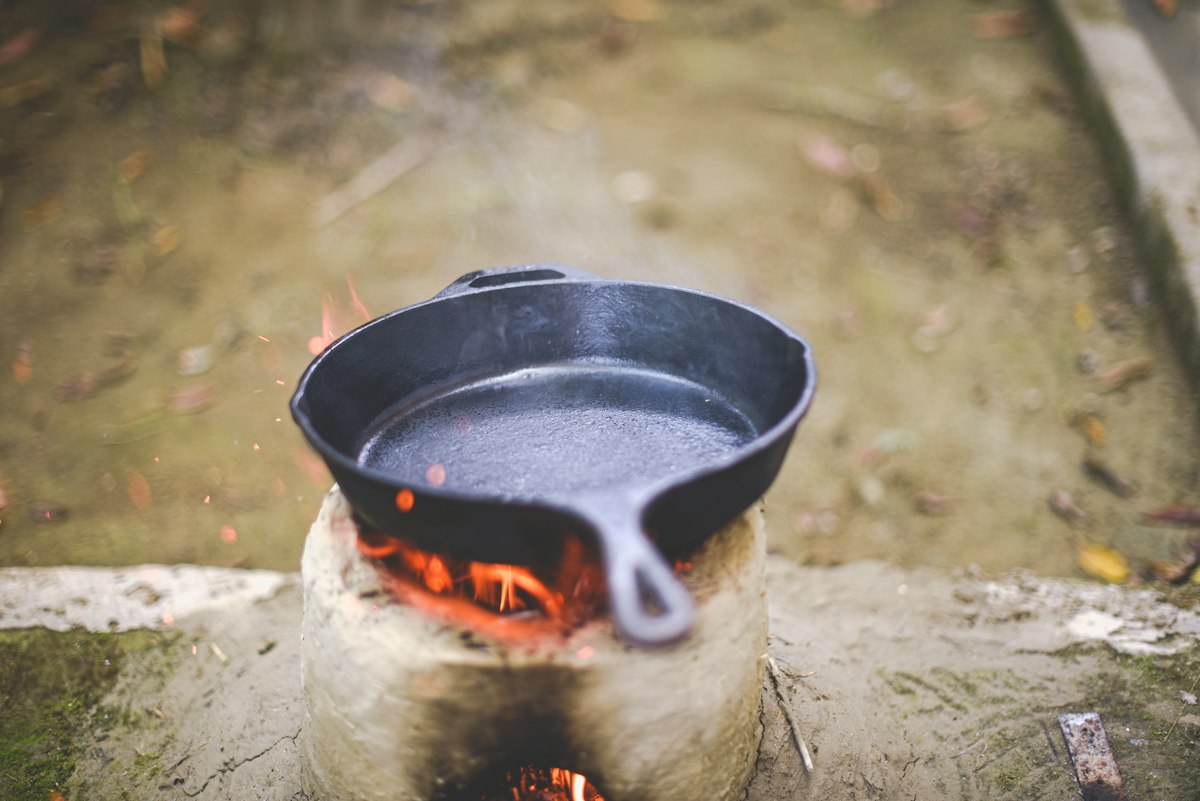
If you've handled a skillet from the 1930s, you know the cooking surface is glassy smooth. Pick up most cast iron made since the 1960s and it's pebbled like an orange peel. People assume the old iron was better. The truth is that the old iron was finished.
Every sand-cast part comes out of the mold with a rough surface, because sand is rough. The old foundries ran each skillet across a grinding wheel or a lathe to machine the interior flat. That step cost time and money, and as foundries competed on price in the postwar years, it was the first thing to go.
The pebbled surface isn't a disaster. Seasoning fills it in over years of use. But a machined surface seasons faster, releases food more easily, and makes a thinner, lighter pan possible, because you're not relying on thickness to hide casting variation.
We machine every No. 10 on a CNC mill after casting. It adds about eleven minutes per skillet. We think it's the whole difference.